
My migraine
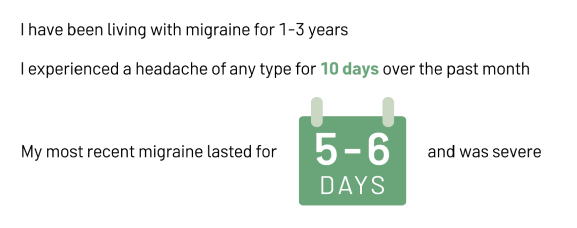
Sharing the number of headache days you have each month, and how long your last attack lasted, can help your healthcare professional understand the severity and frequency of your migraine attacks.

This website has been funded and developed by AbbVie and is intended for UK audiences only.

Sharing the number of headache days you have each month, and how long your last attack lasted, can help your healthcare professional understand the severity and frequency of your migraine attacks.
For demonstration purposes only – real outcomes may differ.
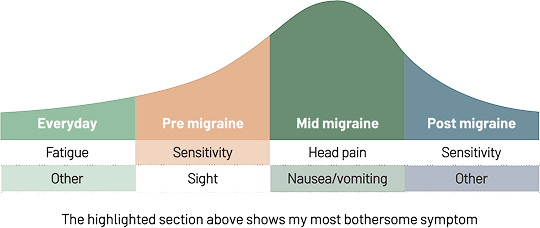
Sharing your symptoms, including which ones bother you most; before, during and after a migraine can help your healthcare professional spot patterns. This can start a conversation on how to potentially manage your symptoms.
For demonstration purposes only – real outcomes may differ.
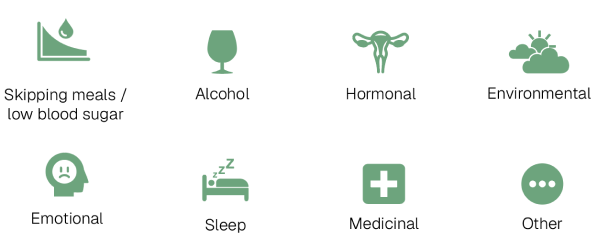
Identifying what triggers your migraine can help your healthcare professional to understand what might bring them on or worsen them, and whether there are ways to manage triggers.
For demonstration purposes only – real outcomes may differ.
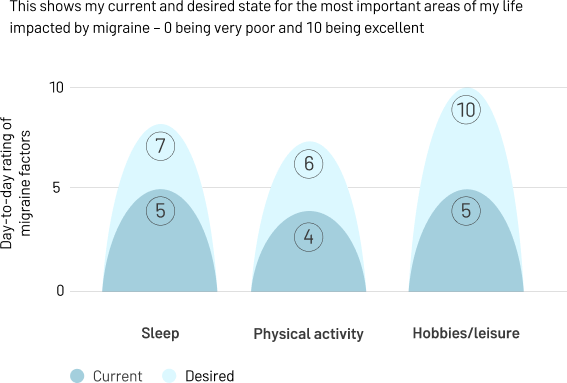
Migraines can affect daily life, as well as long-term goals. Sharing how they impact you and what matters most to you can help your healthcare professional understand how best to support you.
For demonstration purposes only – real outcomes may differ.

Understanding your current and past medications can support shared discussions on your migraine management going forward.
For demonstration purposes only – real outcomes may differ.

Other medical conditions can be related to migraine or its management, and your healthcare professional needs to understand the full picture to be able to appropriately manage your care.
For demonstration purposes only – real outcomes may differ.
Bringing your report to your next appointment helps get a snapshot of your migraine history, so you can have more focussed conversations about what matters most to you, even in a short appointment.
With clear information in one place, you and your healthcare professional can make more informed decisions and agree on a management plan together.
Creating a Migraine Profile can help you arrive prepared, with information to support more focused conversations with your healthcare professional.
While your Migraine Profile can be a helpful resource, it is important to consult with your healthcare professional for accurate diagnosis, guidance, and recommendations. It doesn’t replace medical advice.